
CAMMP Day - Mathematical Modeling Day
| What: | Students experience real-world applications of mathematics, gain insight into current fields of research, and engage in mathematical modeling. The workshops offer a hands-on look at the problem-solving strategies used in numerous STEM professions and degree programs. A detailed description of the topics offered can be found below. |
| Who: |
Middle or high school students (depending on the topic selected). Information about the required prior knowledge of school mathematics can be found in the table below. |
| When: | 2–4 double periods, intensive session (can also be spread over several days upon request) |
| Where: | Online, at school, or at the university |
| How: | Work in small groups, interim plenary discussions, supervision by scientists |
| Fee: | Free |
| Access: |
Would you like to conduct a CAMMP workshop in your own classroom? We’re happy to provide you with the teaching and learning materials at any time for use in your own classes. You can find all the information about using the materials here. |
Supporting innovative materials development with their school classes
We’d like to give a special shout-out to the new CAMMP workshop, “Modeling Smartphone Batteries.” In this workshop, students in 10th grade and above explore how to model battery consumption using linear functions and also get their first taste of the Python programming language. By participating in workshops that include accompanying research, you’ll actively contribute to the evidence-based development of innovative teaching concepts.
If you’re interested, please feel free to send an email to katharina.bata∂kit.edu.
SIGN UP NOW
Here, you can register for a CAMMP Day or request materials—whether as an individual or as a teacher with your school class.
Link
Favorites
| Topic | Starting in the school year | Prerequisites | Key Content | |
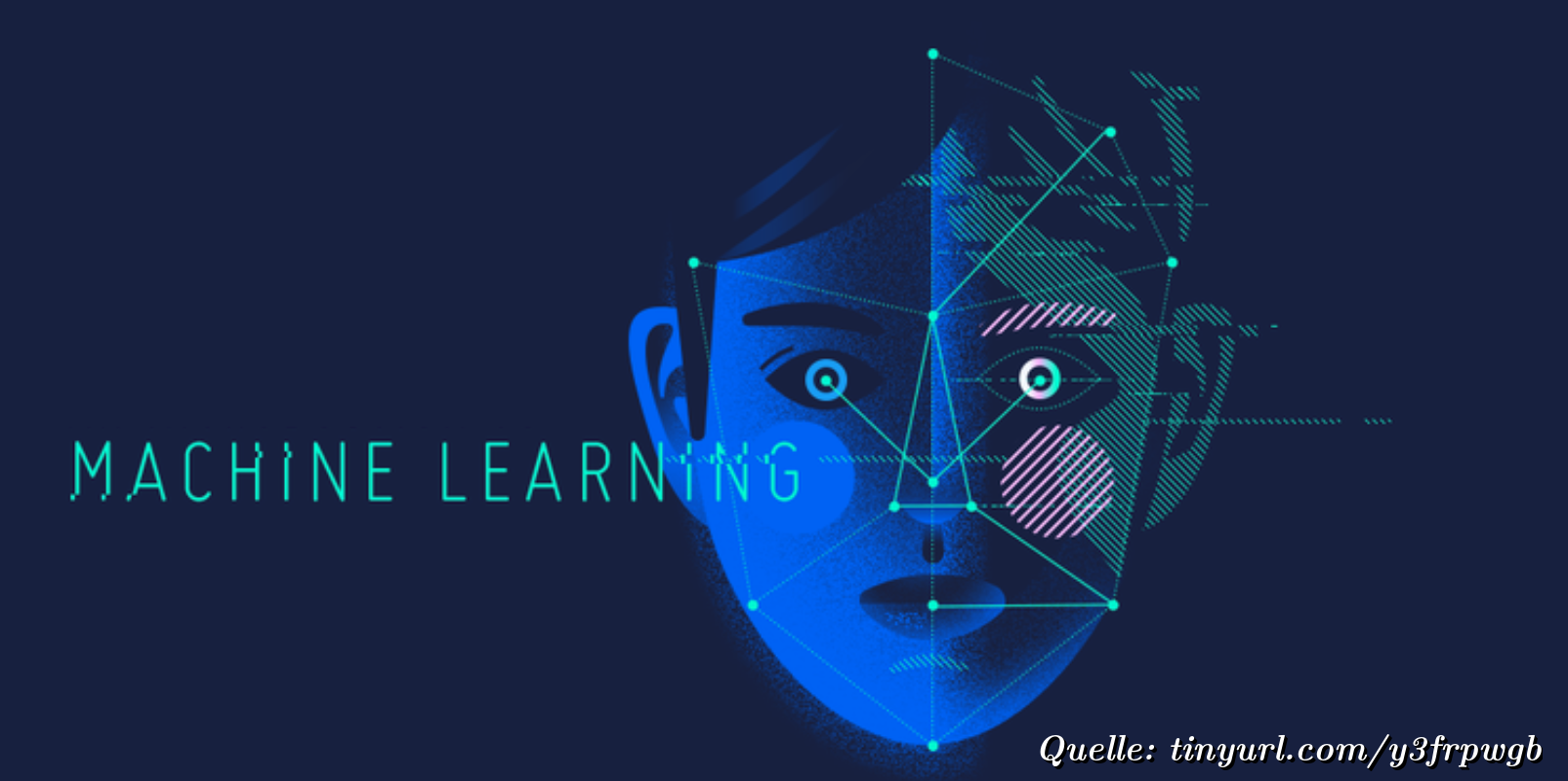 |
10 | Vectors, Planes in R3 | Vectors, Scalar Product, Distance from a Point to a Plane in Normal Form, Artificial Intelligence | |
 |
10 | Concept of a Function, Differential Calculus, Systems of Linear Equations | Data Handling, Artificial Intelligence | |
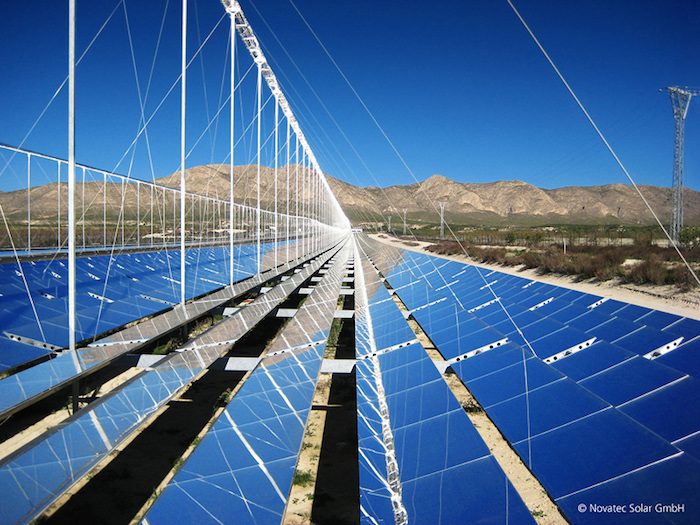 |
Solar Energy |
8
|
Pairs of Angles, Thales’ Theorems, Concept of a Function |
Geometry, Trigonometry, Angle Relationships in Triangles, Renewable Energy, Integration, Optimization |
 |
Social Networks | 7 | Tree Diagrams (Sum and Path Rules) | Measures of central tendency, measures of dispersion, box plots, two-stage random experiments, probability theory, working with data and social media |
 |
10 | absolute and relative frequencies, probabilities, and random experiments |
stochastic processes, conditional probabilities, weighted mean, language, and artificial intelligence |
All Workshops
| Topic | Starting in the school year | Prerequisites | Key Content | ||
 |
11 | Euclidean distance (3D), vectors, magnitude of a vector | Metrics, Acceleration, Artificial Intelligence | ||
 |
10 | absolute and relative, conditional probability, probability distributions | Concept of probability, stochastic processes, artificial intelligence | ||
| |
10 | Vectors, planes in R³ | Vectors, Scalar Product, Distance from a Point to a Plane in Normal Form, Artificial Intelligence | 1 | |
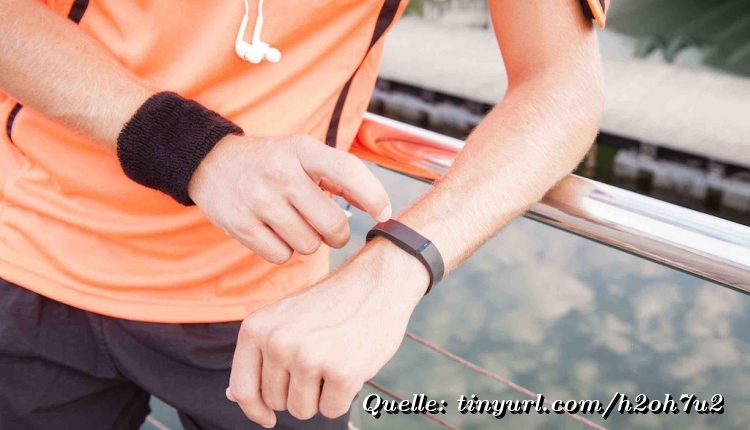 |
Fitness trackers | 9 | Concept of a Function | Function Equations, Trigonometric Functions | |
 |
10 | Concept of a Function (Linear, Quadratic, and Exponential Functions; Influence of Parameters; Global Behavior) | Artificial Intelligence, Artificial Neural Networks, Function Approximation, Function Composition | ||
|
|
10 | Concept of a Function, Differential Calculus, Systems of Linear Equations | Data Handling, Artificial Intelligence | ||
 |
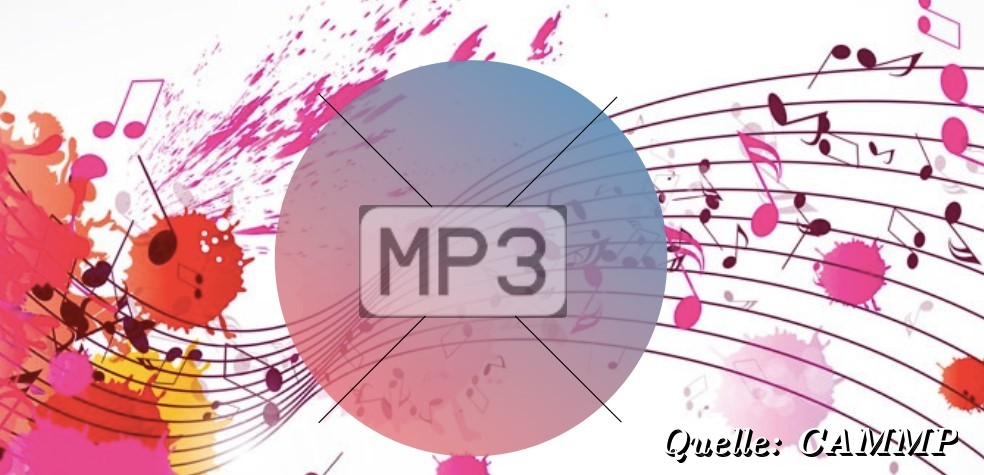
Shazam | 9 | Concept of a Function | Function equations, trigonometric functions, signal processing | |
| |
Solar Energy |
8 |
Pairs of Angles, Thales’ Theorems, Concept of a Function |
Geometry, Trigonometry, Angle Relationships in Triangles, Renewable Energy, Integration, Optimization |
|
 |
Social Networks | 7 | Tree Diagrams (Sum and Path Rules) | Measures of central tendency, measures of dispersion, box plots, two-stage random experiments, probability theory, working with data and social media | |
 |
Spam filters | 10 | Relative Frequencies, Probabilities, and Random Experiments | relative frequencies, conditional probabilities, random experiments, classification | |
 |
11 | trigonometric functions, vectors, magnitude of a vector, relative frequencies | trigonometric functions, classification, artificial intelligence | ||
 |
Encryption | 7 | Prime numbers, variables, written division with a remainder | Caesar cipher, RSA encryption, prime numbers, modulo arithmetic, responsible handling of data | |
| |
10 | absolute and relative frequencies, probabilities, and random experiments | stochastic processes, conditional probabilities, weighted mean, language, and artificial intelligence | ||
| 1 Favorites |
7th Grade
| Topic | Starting in the school year | Prerequisites | Key Content | |
|
|
Social Networks | 7 | Tree diagrams (sum rule and path rule) | Measures of central tendency, measures of dispersion, box plots, two-stage random experiments, probability theory, working with data and social media |
|
|
Encryption | 7 | Prime numbers, variables, written division with a remainder | Caesar cipher, RSA encryption, prime numbers, modulo arithmetic, responsible use of data |
8th Grade
| Topic | Starting in the school year | Prerequisites | Key Content | |
|
|
Solar Energy | 8 | Pairs of Angles, Thales’ Theorem, Concept of a Function | Geometry, Trigonometry, Angle Relationships in Triangles, Renewable Energy, Integration, Optimization |
9th Grade
| Topic | Starting in the school year | Prerequisites | Key Content | |
|
Fitness trackers | 9 | Concept of a Function | Function Equations, Trigonometric Functions |
|
Shazam | 9 | Concept of a Function | Function Equations, Trigonometric Functions, Signal Processing |
10th Grade
| Topic | Starting in the school year | Prerequisites | Key Content | |
|
10 | absolute and relative frequencies, conditional probability, probability distributions | Concept of probability, stochastic processes, artificial intelligence | |
|
|
10 | Vectors | Vectors, Scalar Product, Distance from a Point to a Plane in Normal Form, Artificial Intelligence | |
|
10 | Concept of a Function (Linear, Quadratic, and Exponential Functions; Influence of Parameters; Global Behavior) | Artificial Intelligence, Artificial Neural Networks, Function Approximation, Function Composition | |
|
10 | Concept of a Function, Differential Calculus, Systems of Linear Equations | Data handling, artificial intelligence | |
|
10 | Relative Frequencies, Probabilities, and Random Experiments | relative frequencies, conditional probabilities, random experiments, classification | |
|
10 | absolute and relative frequencies, probabilities, and random experiments | stochastic processes, conditional probabilities, weighted mean, language, and artificial intelligence |
11th Grade
| Topic | Starting in the school year | Prerequisites | Key Content | |
|
11 | Euclidean distance (3D), vectors, magnitude of a vector | Metrics, Acceleration, Artificial Intelligence | |
|
11 | trigonometric functions, vectors, magnitude of a vector, relative frequencies | trigonometric functions, classification, artificial intelligence |